
Multi-origin flight planning guide
Find a practical meetup destination from two starting cities
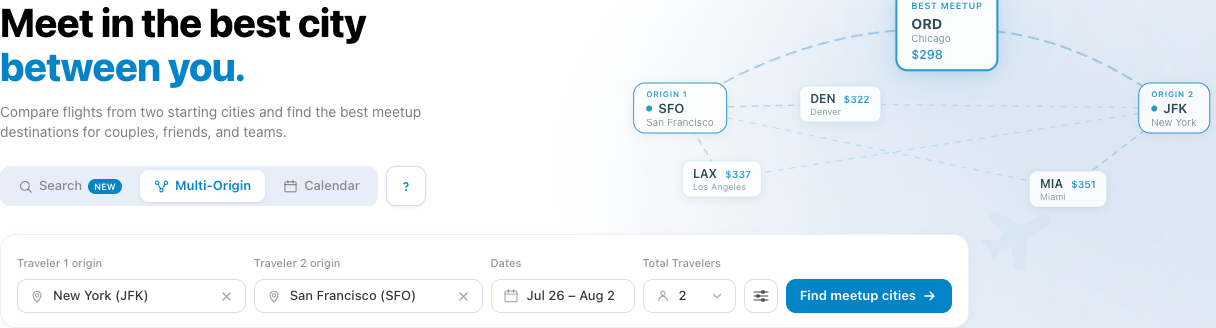
Use Aviunion to compare the journey from two origins, build a shared destination shortlist, and choose a meetup that works for both travelers, not merely the point halfway on a map.
Start a multi-origin searchBegin with the trip constraints you actually share
Multi-origin planning starts with two separate departure airports and one shared date range. Before searching, agree on the dates, the number of travelers leaving from each origin, a rough budget, and any hard limits on stops or total travel time. Those constraints turn a broad “where should we meet?” conversation into a comparison you can act on.
Enter one origin for each traveler. If either person can use more than one nearby airport, decide which airport is realistically reachable before you search; drive time, parking, rail access, and early-morning transportation are part of the trip even though they are not included in the flight price.
- Use the airports each traveler will actually depart from, not just the nearest large city.
- Choose dates both travelers can book before comparing destinations.
- Record non-negotiables, such as no overnight connections, so the cheapest result does not automatically win.
A geographic midpoint is not the same as a practical meetup
The halfway point between two cities can have poor air service, require difficult connections, or create an expensive journey for both people. A destination farther toward one traveler may still be the fairer choice if both routes are frequent, reasonably timed, and easier to recover when travel is disrupted.
Treat fairness as a set of visible tradeoffs rather than a single formula. One trip might prioritize the lowest combined flight cost; another might minimize the difference between each person’s travel time. Friends coordinating a weekend may care most about arrival times, while a team gathering may need schedules that fit a fixed workday.
- Combined price: what the two itineraries cost together at the time of the search.
- Time balance: whether one traveler carries most of the flying or connection burden.
- Schedule fit: whether both people can arrive and depart within the useful part of the trip.
- Route resilience: the number of connections and the practical alternatives if a flight changes.
Use destination results to build a shortlist
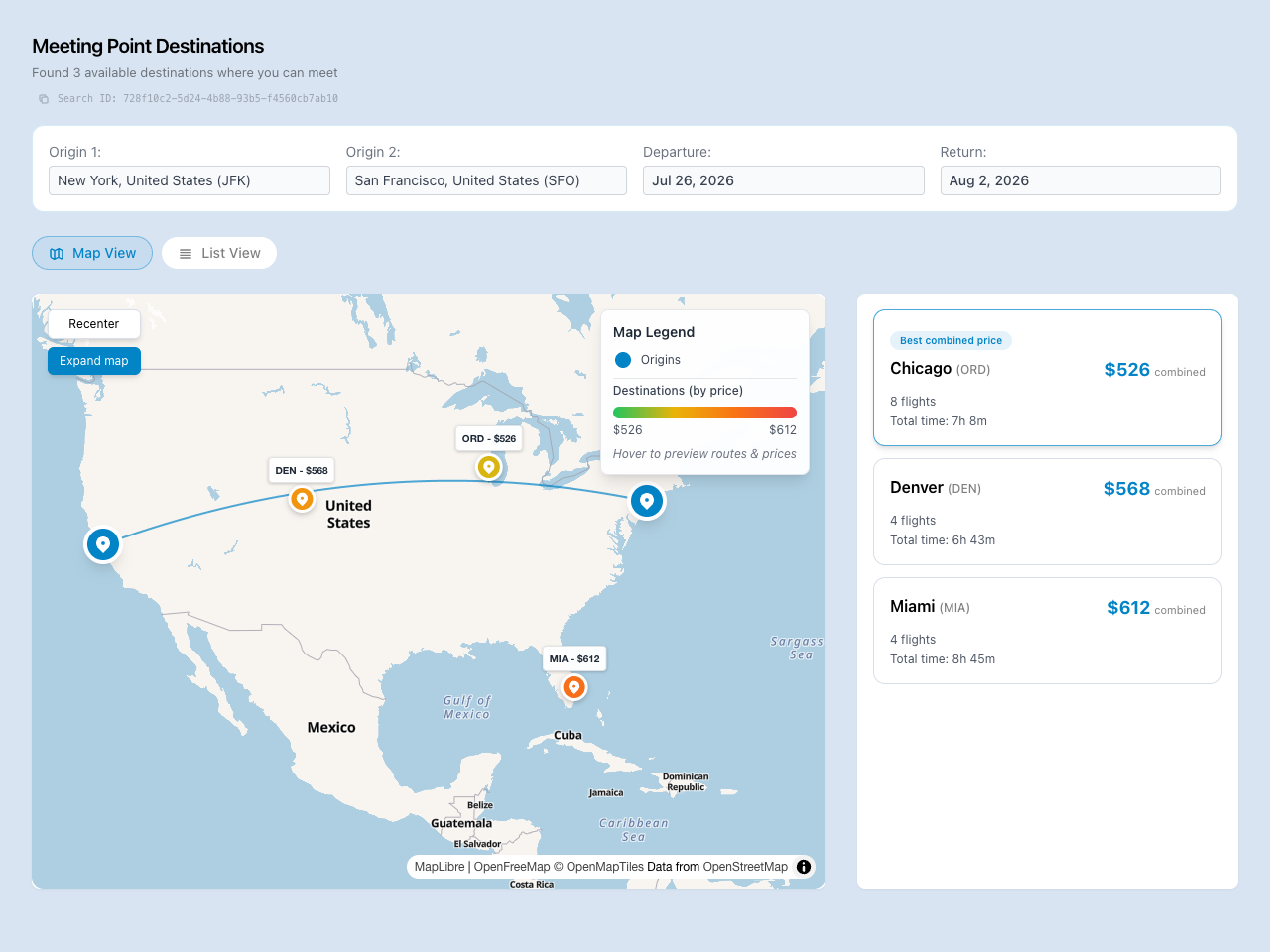
Aviunion brings candidate destinations into one results view instead of making you repeat two disconnected searches for every city. The map shows how the origins and meetup choices relate geographically, while destination cards summarize the combined price signal, available flight count, and total travel time returned for the comparison.
Start with two or three plausible candidates. The first card can be a useful lead, but it is not a reason to book right away. Compare the gap between candidates and ask what the extra cost buys: a shorter trip, a direct route, a better arrival time, or simply a destination both travelers prefer.
If you already have cities in mind, Advanced options lets you add selected meetup destinations and, when appropriate, limit the comparison to those choices. That is useful when the trip is tied to an event, a family visit, or a short approved list.
Review both travelers’ flights before choosing the city
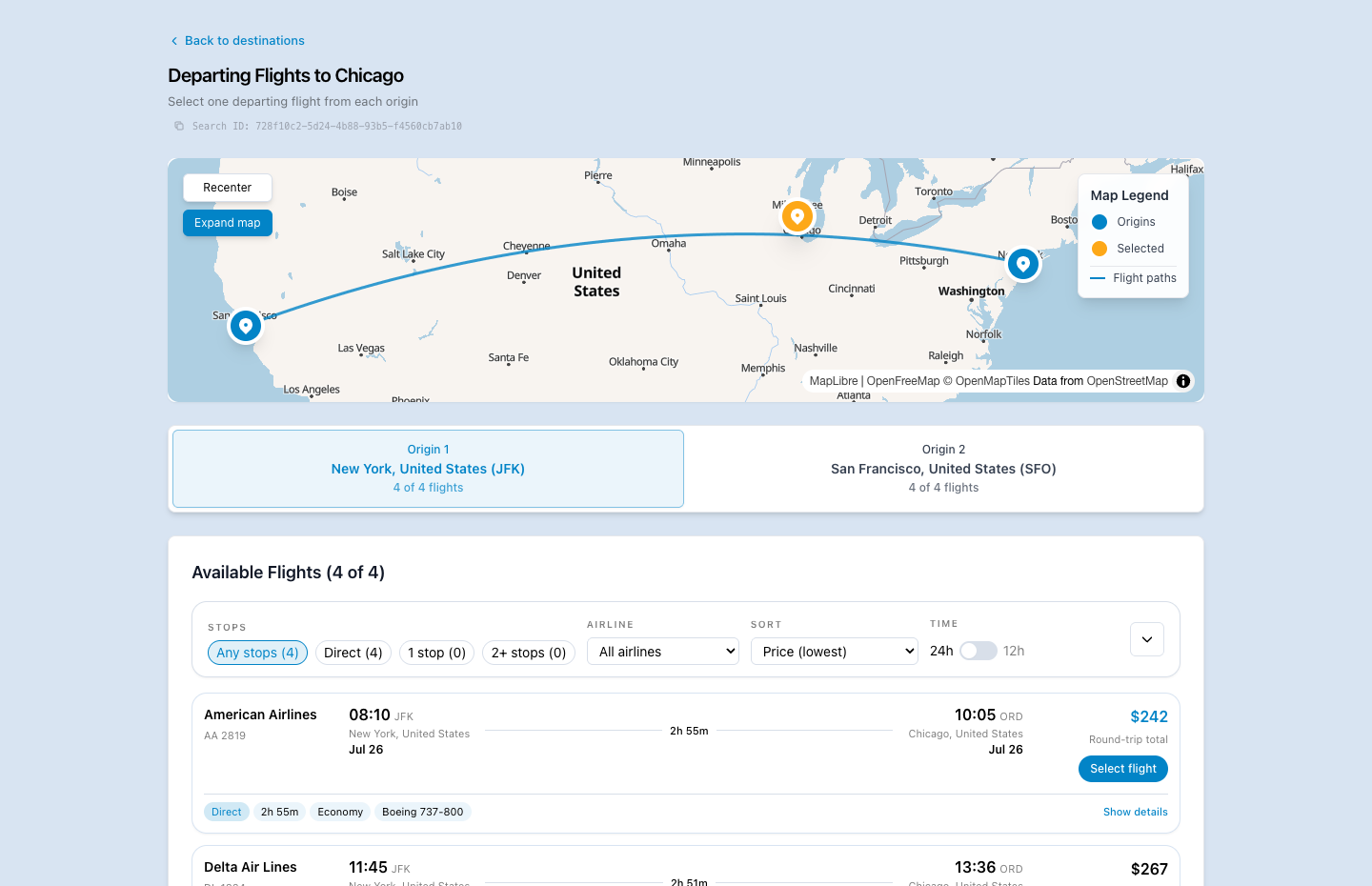
After selecting a destination, Aviunion separates the flight decision by origin. Review one traveler’s departing options, then the other’s, and repeat the process for the return. The origin tabs preserve the fact that a meetup trip is made of two independent itineraries even when the destination decision is shared.
Use the filters and sort controls to test the shortlist against your real priorities. A low combined destination estimate can hide an inconvenient itinerary for one person. Look at departure and arrival time, stops, duration, airline, layover details, and the return journey before either traveler purchases a ticket.
A practical decision framework for two origins
Write down the same facts for each candidate destination. A small comparison is often enough to reveal whether the lowest flight total is genuinely best or merely the easiest number to notice.
Scroll horizontally to compare every column.
| Decision factor | What to compare | Question to ask together |
|---|---|---|
| Combined flight cost | Both travelers’ displayed round-trip totals | Is the difference meaningful after ground transportation and fees? |
| Travel-time balance | Total duration, stops, and layovers from each origin | Is either person taking on a disproportionate journey? |
| Useful time together | Both arrival times and both departure times | How much of the trip remains after travel? |
| Airport access | Driving, transit, parking, and buffer time at each end | Does a “cheaper” airport create a harder door-to-door trip? |
| Change risk | Connections, late arrivals, and available alternatives | What happens to the meetup if one itinerary is disrupted? |
Coordinate the handoff and final booking
Aviunion is a discovery and comparison tool; it does not issue tickets or guarantee the displayed price, schedule, or availability. Each traveler continues to an airline or travel provider responsible for the final itinerary, fare rules, passenger details, payment, support, and any changes after purchase.
Open both provider options before buying. Confirm airport codes, dates, local arrival times, baggage allowances, cancellation terms, and the final total. Because two fares can change independently, coordinate the purchases and agree in advance what to do if only one itinerary remains available.
Use Multi-Origin Search when the destination is still the shared decision. If the destination is already fixed and one traveler simply wants to compare several practical airports, use the nearby-airport Flight Search described in the related guide below.
- Do not rely on a screenshot or earlier result as a current quote.
- Verify both itineraries before either traveler treats the plan as final.
- Keep provider confirmation numbers and change policies separate for each booking.
Ready to search?
Put this guide into practice
Open Aviunion with Multi-Origin Search already selected.